
NASA targets 2028 nuclear-powered Mars mission and lunar reactor by 2030
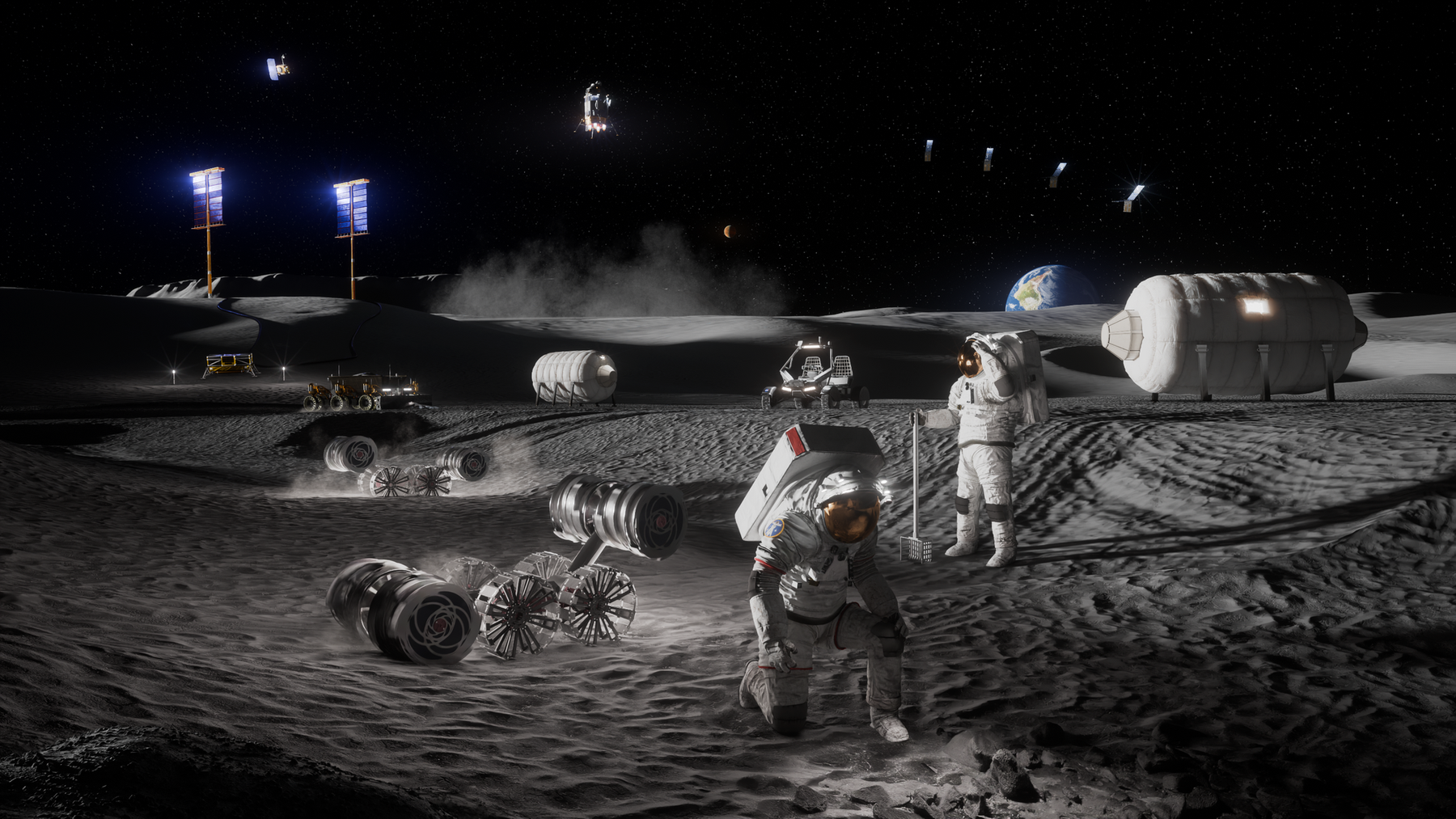
(SpaceEnergy) NASA is advancing nuclear power and propulsion technologies, targeting a late 2028 launch for its first fission-powered interplanetary spacecraft and a launch-ready lunar reactor by 2030, the agency told SpaceEnergy.
“The future of space exploration requires power that works anywhere,” NASA said.
“NASA is investing in nuclear technologies to provide reliable, sun-independent energy for missions to the Moon, Mars, and beyond,” it added.
Working closely with the US Department of Energy (DOE) and industry partners, NASA is developing higher-efficiency radioisotope power systems, nuclear electric propulsion, nuclear thermal propulsion and fission surface power.
Late 2028 launch
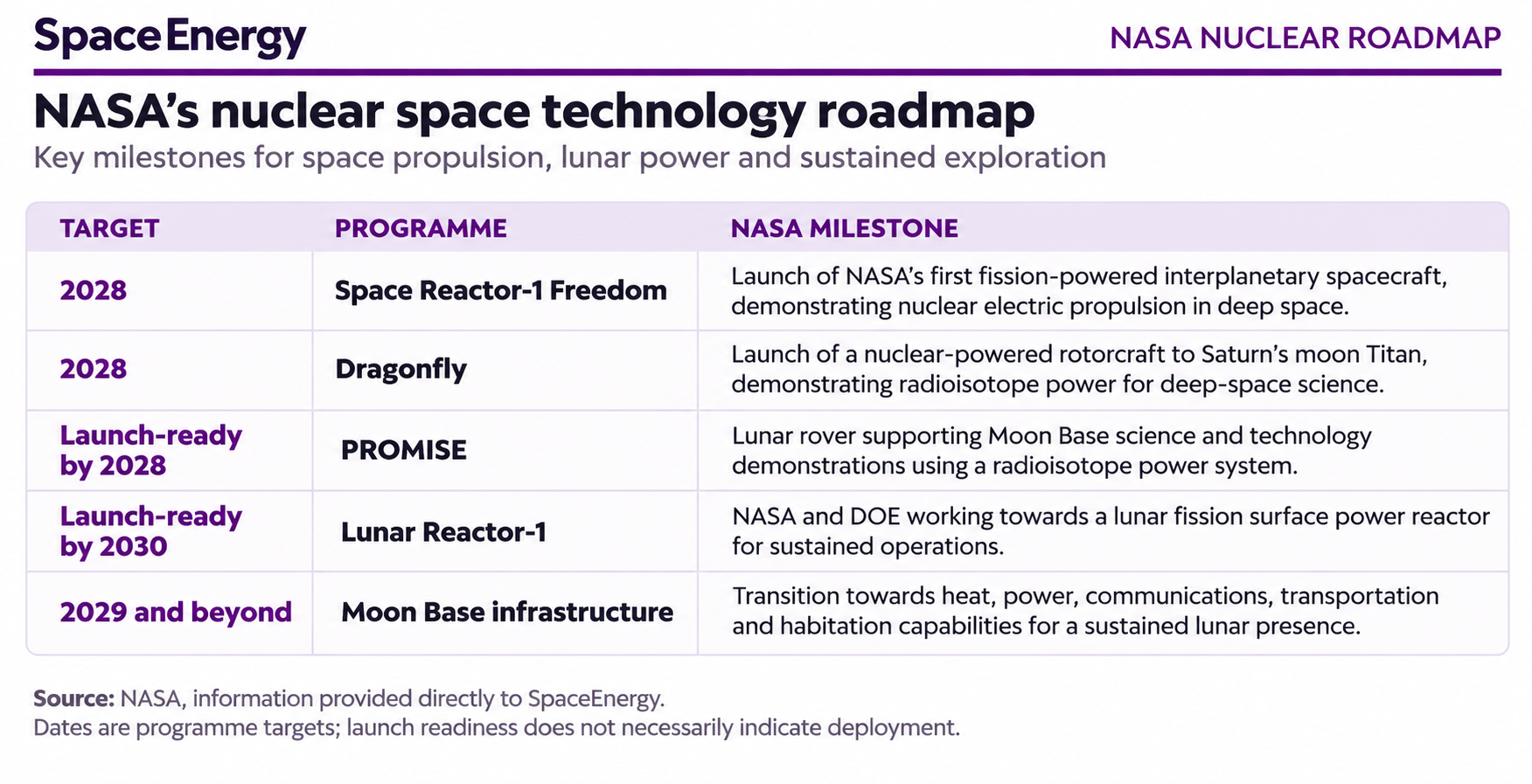
A major milestone will be Space Reactor-1 (SR-1) Freedom, which NASA describes as humanity's first fission-powered spacecraft designed to operate beyond Earth's orbit.
It said the mission will demonstrate nuclear electric propulsion in deep space while carrying the SkyFall payload to Mars, comprising three helicopters evolved from NASA's Ingenuity technology.
NASA is targeting a late 2028 launch.
In October, experts from NASA, DOE and industry partners met at NASA's Glenn Research Center in Cleveland for a major SR-1 Freedom mission design review.
The review confirmed several key decisions, moving the mission from an early concept towards a defined spacecraft design.
“Nuclear electric propulsion also offers significant propellant efficiency advantages, potentially enabling crew, cargo, and science missions,” it said.
Lunar Reactor-1
NASA is also advancing Lunar Reactor-1 (LR-1), a fission surface power system intended to provide reliable electricity for future lunar operations.
Following an industry day in September, the agency is progressing procurement activities for a 20-kilowatt (20kW) lunar fission power system, with the broader objective of having a lunar surface reactor launch-ready by 2030.
“Fission can provide continuous power through the long lunar night, during Martian dust storms, and in deep-space environments,” the agency said.
On the Moon, reliable electricity will be essential for habitats, communications, scientific instruments and resource utilisation, it noted.
Nuclear fission could provide the consistent energy required to support these capabilities and sustain a long-term human presence, according to NASA.
Lunar rover
NASA is also planning to deploy the Polar Rover for Observation, Mapping, and In-Situ Exploration (PROMISE) to the Moon's South Pole.
The nuclear-powered rover will study the lunar surface and subsurface, prospect for resources and gather information to support the establishment of NASA's Moon Base.
PROMISE will be constructed largely from existing hardware developed for NASA's ongoing Mars rover missions.
This includes a spare Multi-Mission Radioisotope Thermoelectric Generator (MMRTG) flight unit, designated F-3.
The generator will use partially depleted plutonium oxide that NASA said is too aged to be suitable for later missions.
NASA expects the system to produce 75 watts (75W) of electricity, approximately the same amount currently generated by its Curiosity Mars rover.
PROMISE is expected to be ready for launch in late 2028.
Radioisotope heaters
NASA is also advancing radioisotope technologies to support scientific missions operating in extreme environments.
The agency and DOE are providing 24 Light Weight Radioisotope Heater Units to support both Dragonfly and the European Space Agency's Rosalind Franklin Mars rover.
These units will help protect critical spacecraft systems from extreme cold.
NASA said the technology will also be deployed to enable systems to survive the lunar night.
Up to 25 lunar missions
The nuclear technology programmes form part of NASA's wider Moon Base initiative.
Between now and 2029, the agency plans up to 25 lunar missions, including 21 landings, to test technologies and prepare for sustained lunar operations.
Demonstrations will include lunar infrastructure, autonomous and crewed rovers, communications systems, power technologies designed to survive the lunar night and advanced hopper drones such as MoonFall.
From 2029 onwards, NASA plans to transition from early robotic demonstrations towards deploying the heat, power, communications, transportation and habitation capabilities needed for a sustained lunar presence.
“When NASA sets a roadmap this focused and ambitious, it sends a powerful signal to industry and international partners alike: that together, we can deliver on the near impossible,” the agency said.
Discussion