
SpaceX catches Starship upper stage with launch tower for first time
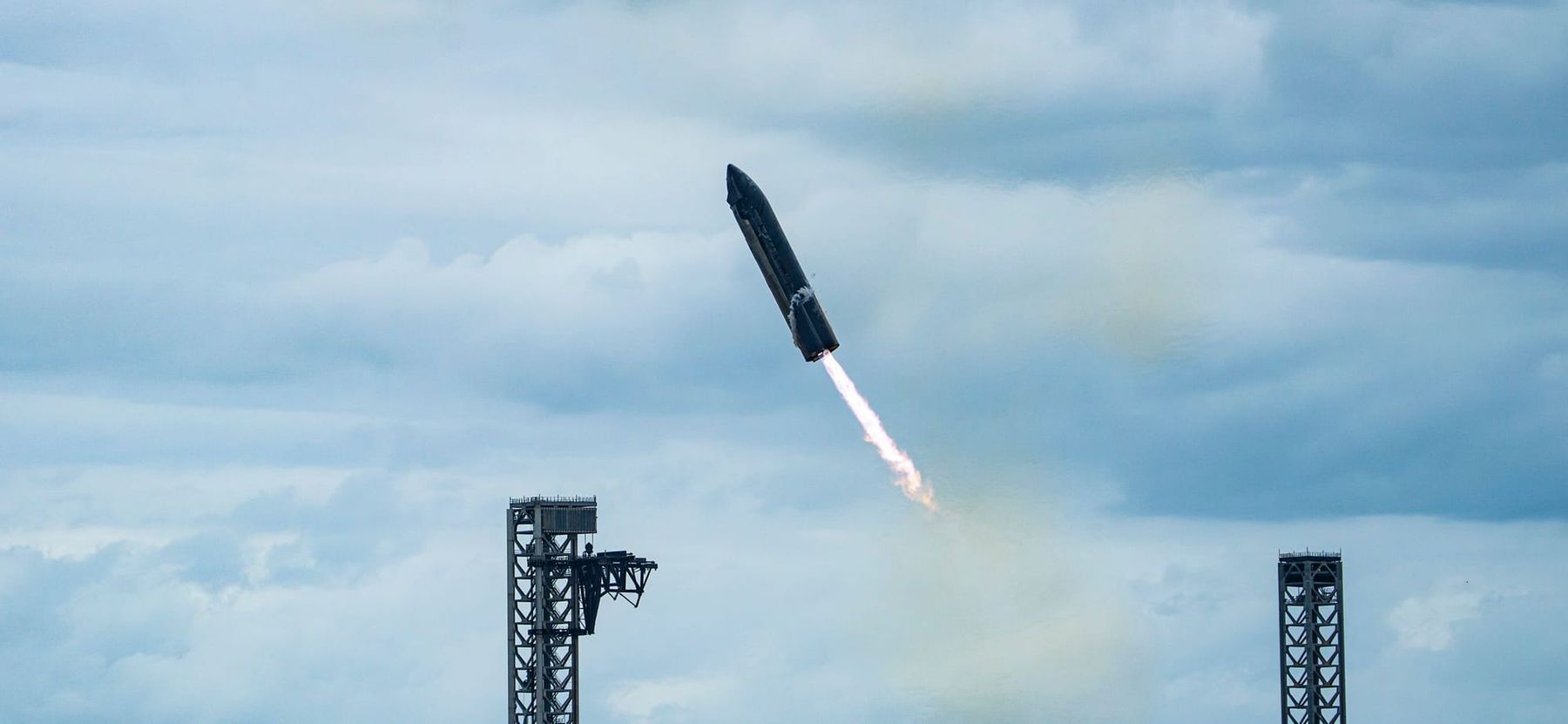
(SpaceEnergy) SpaceX has caught a returning Starship upper stage with its launch tower for the first time, after a flight of more than 20 hours that deployed 26 Starlink satellites.
SpaceX said Starship lifted off from Starbase, Texas, on 13 November 2026 on its 15th flight and returned to Starbase on 14 November, where the arms of the launch tower closed to catch the vehicle “for the very first time”.
The Super Heavy booster ascended from Pad 2 under the power of 33 Raptor engines. After hot-staging, the booster relit 32 of the planned 33 engines for its boostback burn.
“The boostback burn ended early due to low fuel mass, with the root cause under investigation,” SpaceX said.
The booster's guidance, navigation and control system then triggered an automated abort, diverting it to an offshore landing site, where it executed a landing burn while hovering over the Gulf.
SpaceX said the booster's flight termination system was triggered upon landing burn shutdown.
The Starship upper stage completed its ascent burn and coast before reigniting a single Raptor engine for an orbital insertion burn. It then deployed 26 Starlink V3 satellites, with which SpaceX said contact was made soon after.
After monitoring the vehicle's systems for more than 20 hours in space, the flight control team relit a single Raptor sea-level engine for a deorbit burn.
Starship re-entered the atmosphere, flew a final manoeuvre over the Gulf and approached the launch site, where three Raptor engines ignited for a landing flip and slow descent before the tower caught the vehicle.
SpaceX's published mission timeline lists the deorbit burn at about 21 hours 36 minutes after liftoff and the landing burn at about 22 hours 32 minutes after liftoff.
Discussion