
DLR tests CO₂-to-propellant process in microgravity
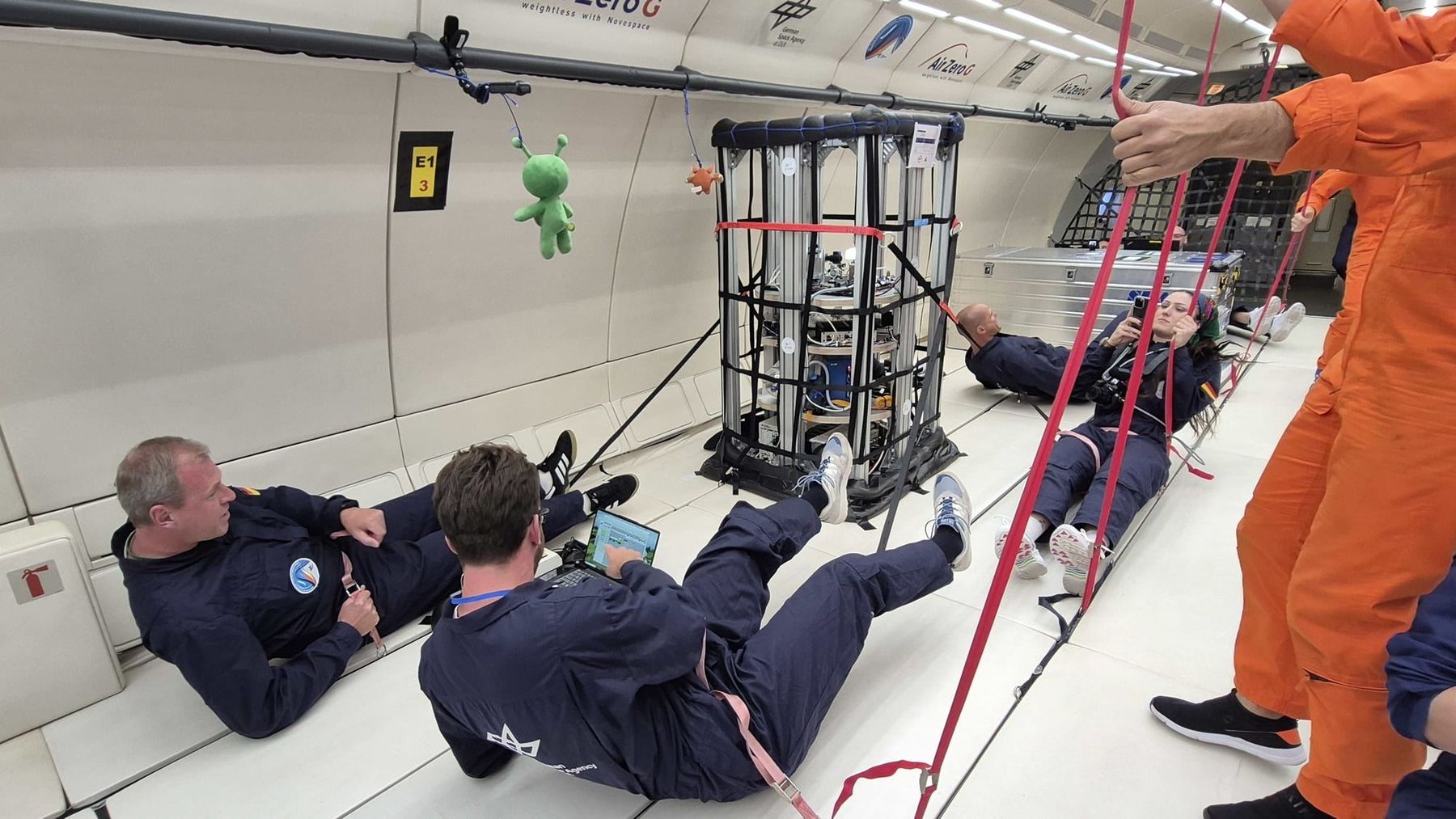
(SpaceEnergy) Germany’s DLR has begun microgravity testing of an electrochemical process designed to convert carbon dioxide and water into oxygen and chemicals including methane for future space missions.
The COLA ZERO experiment, developed by the Center of Applied Space Technology and Microgravity at the University of Bremen, is flying during the German Space Agency at DLR’s 47th parabolic-flight campaign in Bordeaux, which runs from 7 to 18 September.
DLR said electrolysis can convert CO₂ into products including carbon monoxide or methane for use as propellants or chemical feedstocks. Using water as the electrolyte also produces oxygen for life support. Water resources identified on the Moon and Mars could potentially supply the process.
COLA ZERO is examining how CO₂ conversion and simultaneous oxygen production behave under altered gravity. In terrestrial electrolysis, buoyancy carries gas bubbles away from an electrode; in microgravity, bubbles can remain around it and eventually halt the reaction.
The experiment uses a specially divided electrolysis chamber intended to enable bubble detachment under those conditions. DLR said recycling locally available resources will be essential for longer lunar missions and flights to destinations including Mars.
Discussion