
Japan demonstrates perovskite solar power supply to satellite bus
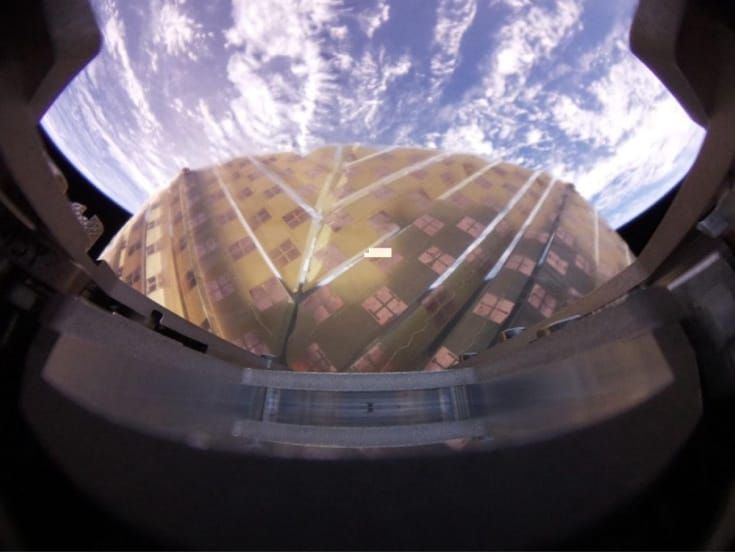
(SpaceEnergy) Japan's space agency JAXA has demonstrated electricity delivery from thin-film perovskite solar cells to the OrigamiSat-2 satellite bus, reporting what it describes as a world-first orbital achievement.
JAXA announced the result on 9 October, confirming that the power transfer was successfully demonstrated on 11 September.
The experiment involved JAXA's Space Exploration Innovation Hub, the Institute of Science Tokyo and Japanese solar cell developer Enecoat Technologies.
The perovskite cells were installed on a deployable membrane aboard OrigamiSat-2, a small satellite developed by the Institute of Science Tokyo and launched aboard a Rocket Lab Electron rocket from New Zealand on 23 April 2026.
The latest achievement follows an earlier orbital demonstration announced in July, when the researchers confirmed that the cells could generate electricity in space and successfully measured their current-voltage characteristics.
The September experiment went further by demonstrating that electricity generated by the perovskite cells could be supplied to the spacecraft's bus.
JAXA described the result as the world's first demonstration of this capability using perovskite solar cells, based on information available on 9 October.
The agency plans to continue collecting current-voltage measurements to assess the cells' long-term performance and degradation under orbital conditions.
Thin-film perovskite technology could eventually provide lightweight, deployable power-generation systems for satellites and lunar infrastructure, including proposed solar power towers.
The experiment establishes a further operational milestone beyond the previously reported generation of electricity in orbit. Long-term durability and performance remain under evaluation.
Discussion