
NASA and US energy department sign wider space nuclear agreement
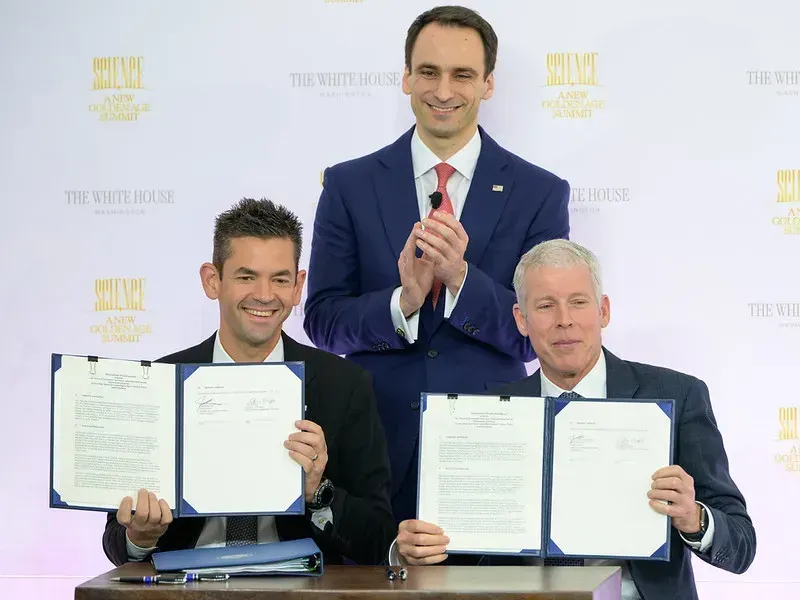
(SpaceEnergy) NASA and the US Department of Energy have signed a new agreement covering nuclear power and propulsion for space missions, extending cooperation across fuel production, technology development, testing, launch integration and operations.
The memorandum of understanding, entitled Accelerating American Leadership in Space Nuclear Power and Propulsion, was signed in Washington on 8 October and takes effect on 1 November 2026.
The agreement establishes a framework for cooperation across the development of space nuclear systems, including fission reactors, propulsion technologies and radioisotope power sources.
It builds on an earlier agreement announced in January 2026, which focused on developing a lunar surface reactor intended to support sustained exploration of the Moon.
The expanded cooperation encompasses NASA's Space Reactor-1 Freedom programme, which is targeting a 2028 launch to demonstrate nuclear electric propulsion on an interplanetary mission.
The spacecraft is intended to transport three SkyFall helicopters to Mars while demonstrating the operation of a fission-powered propulsion system in deep space.
NASA also plans to develop Lunar Reactor-1, a surface power system intended to supply electricity to future lunar infrastructure during extended periods without sunlight.
The agencies will coordinate activities ranging from nuclear fuel production and research to system testing, launch preparations and operational safety.
NASA said nuclear power would support lunar habitats, communications, scientific instruments, rovers and resource utilisation, while enabling more demanding missions to Mars and beyond.
The new agreement broadens the formal framework for cooperation beyond the earlier lunar surface power initiative. It does not itself constitute a reactor construction contract, funding award or completed technology demonstration.
Discussion