
NASA completes 500-second RS-25 engine test for Artemis missions
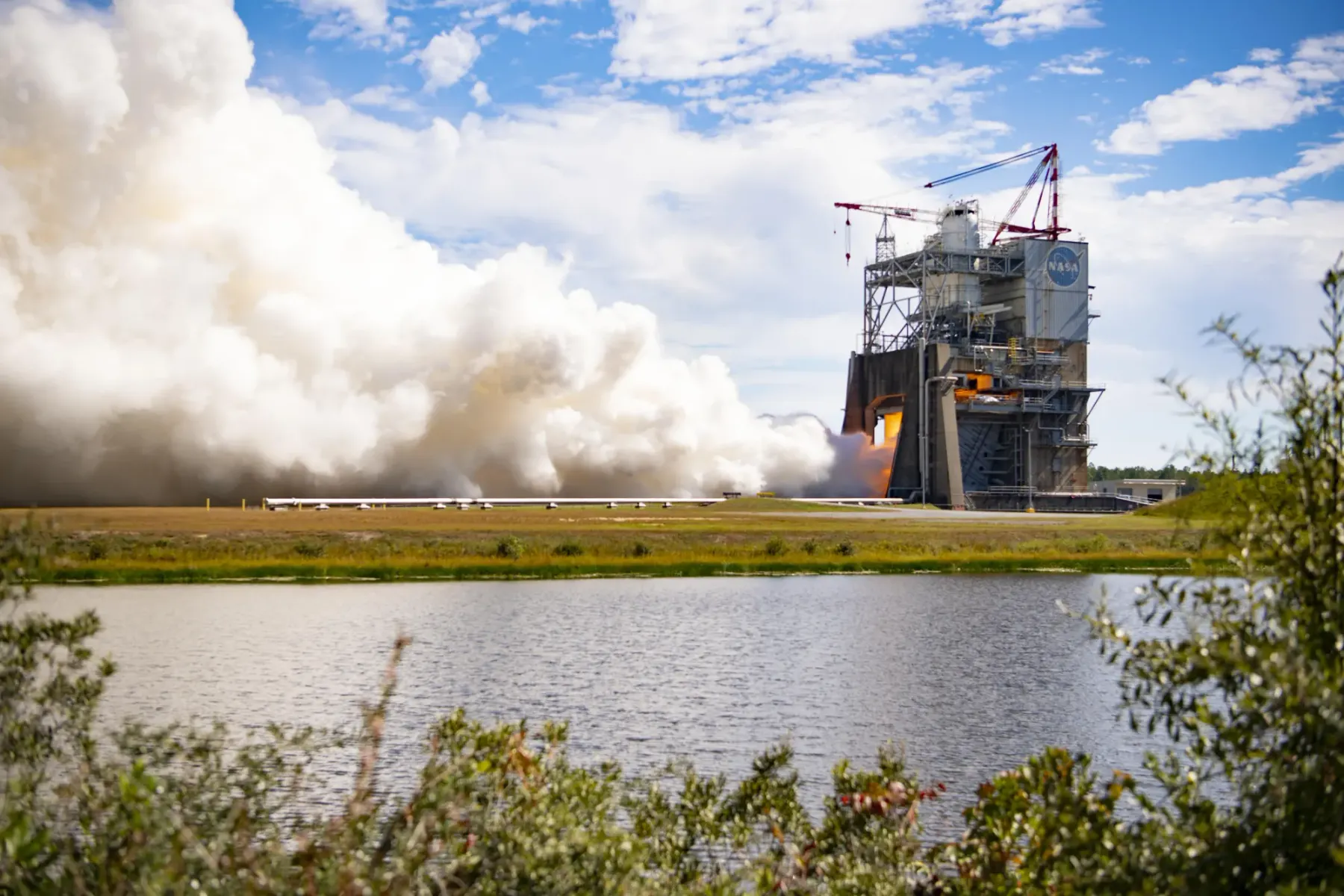
(SpaceEnergy) NASA has completed a 500-second RS-25 rocket engine firing at up to 111% rated power, testing flight components and a new nozzle thermal protection system for future Artemis missions.
The US space agency conducted the test on 21 October at its Stennis Space Center near Bay St. Louis, Mississippi, using developmental engine No. 10001 on the Fred Haise Test Stand.
The engine operated for approximately eight minutes and 20 seconds, matching the firing duration required during a Space Launch System (SLS) launch.
NASA said the test had two principal objectives: acceptance testing of RS-25 flight components intended for future Artemis missions and validation of a new thermal protection system designed to shield the engine nozzle from the thermal environment surrounding SLS during launch.
The developmental engine itself will not fly.
Data collected during the firing will support NASA and prime contractor L3Harris Technologies in improving engine performance and reliability.
Four RS-25 engines power the SLS core stage, providing propulsion alongside two solid rocket boosters during the vehicle's ascent.
The latest test was conducted by personnel from NASA, L3Harris and Nova Space Solutions.
Although NASA confirmed completion of the full-duration firing and achievement of the specified power level, it did not publish detailed thermal measurements, component acceptance results or a final qualification assessment.
Discussion