
NASA launches dual-mode ASCENT propulsion CubeSat
(SpaceEnergy) Star Catcher’s Protostar power node has reached low Earth orbit, advancing the company’s programme to demonstrate optical power transfer between two independently flying spacecraft.
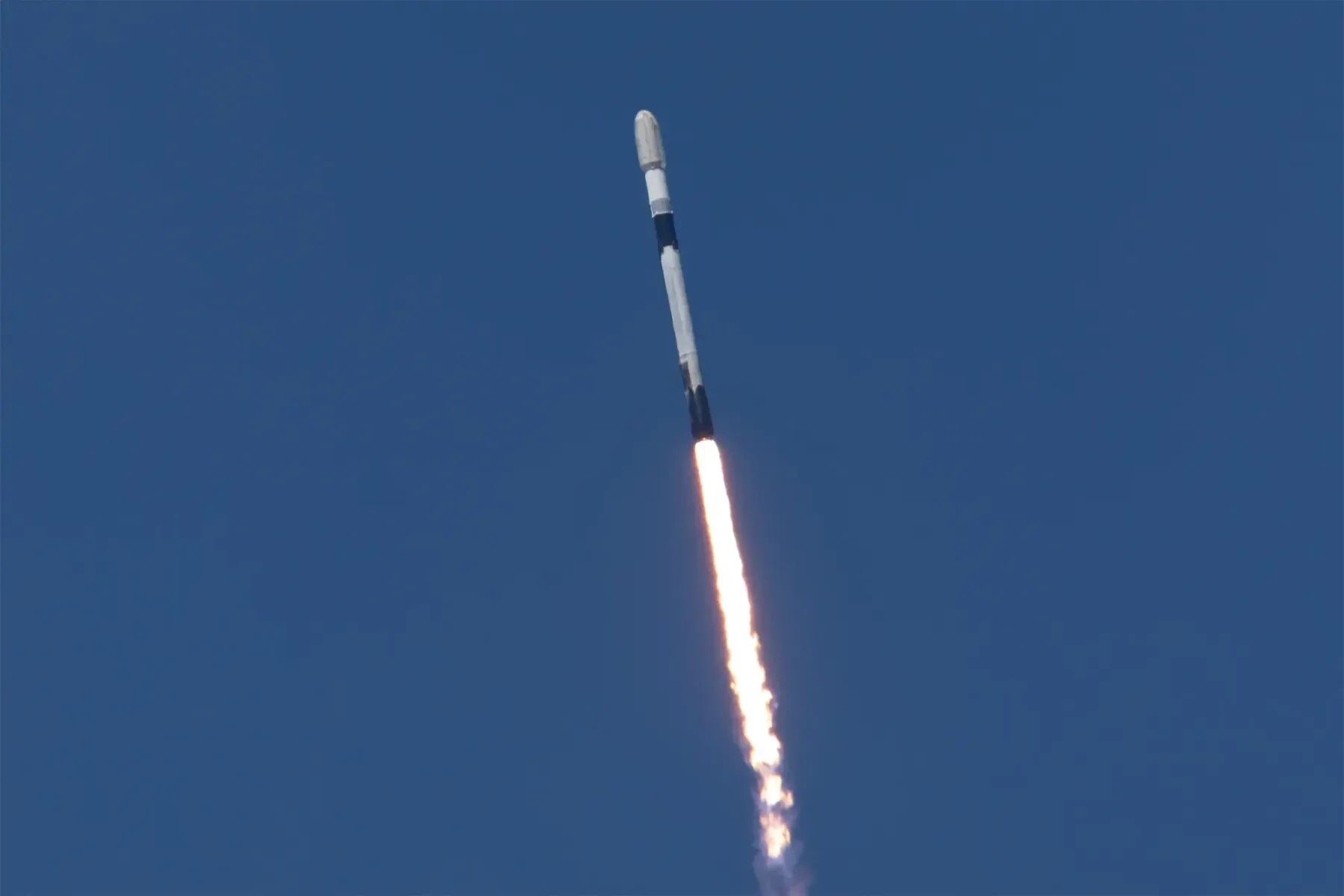
Protostar was deployed from SpaceX’s Transporter-18 rideshare mission after launch from Vandenberg Space Force Base, California. SpaceX’s mission record lists deployment about 1 hour 5 minutes after liftoff.
The deployment is a material milestone beyond Star Catcher’s 28 September announcement that the spacecraft had been shipped to Vandenberg and prepared for launch.
Protostar is the first orbital prototype combining the company’s energy-harvesting, spacecraft acquisition and tracking, and optical energy-transmission technologies in a single system.
Following commissioning, the spacecraft is intended to deploy and track a CubeSat before transmitting measurable optical power to its off-the-shelf solar panels. Star Catcher says successful completion would demonstrate power beaming between two untethered spacecraft without requiring a specialised receiver on the customer vehicle.
The company has previously demonstrated optical power beaming terrestrially and completed its Sextant Alpha orbital acquisition-and-tracking demonstration in late 2025.
Protostar’s arrival in orbit does not constitute successful power transfer. Commissioning, CubeSat deployment, acquisition and tracking, and the planned energy-transmission experiment remain to be completed.
Star Catcher is developing the technology for a proposed orbital power network intended to provide additional electricity to satellites, space stations and orbital computing systems.(SpaceEnergy) NASA has launched its ASCENT Propulsion Dual Mode CubeSat to demonstrate chemical and electrospray propulsion sharing a single supply of low-toxicity spacecraft propellant.
The spacecraft lifted off aboard SpaceX’s Transporter-18 rideshare mission from Vandenberg Space Force Base, California, at 11:32 PDT on 1 October.
The launch is a material milestone beyond NASA’s previously reported completion of environmental and physical ground testing for the 6U spacecraft.
ASCENT Propulsion Dual Mode carries one chemical thruster for higher-power manoeuvres and four electrospray thrusters for lower-power operations. Both propulsion systems draw from a common supply and feed system containing Advanced Spacecraft Energetic Non-Toxic propellant.
NASA said the propellant is safer to handle during spacecraft processing and provides 50% higher specific impulse density than conventional propellants such as hydrazine.
The mission is intended to demonstrate whether a small spacecraft can combine the manoeuvring capability of chemical propulsion with the precision and lower-power operation of electrospray propulsion while avoiding separate propellant systems.
NASA’s Marshall Space Flight Center leads the mission in collaboration with the Massachusetts Institute of Technology, Georgia Institute of Technology and Rubicon Space Systems, a division of Plasma Processes.
The launch establishes the platform for the planned in-orbit propulsion demonstration; successful operation of the two propulsion modes from the common propellant supply remains to be demonstrated.
Discussion