
NASA's Psyche begins sustained electric propulsion after Mars flyby
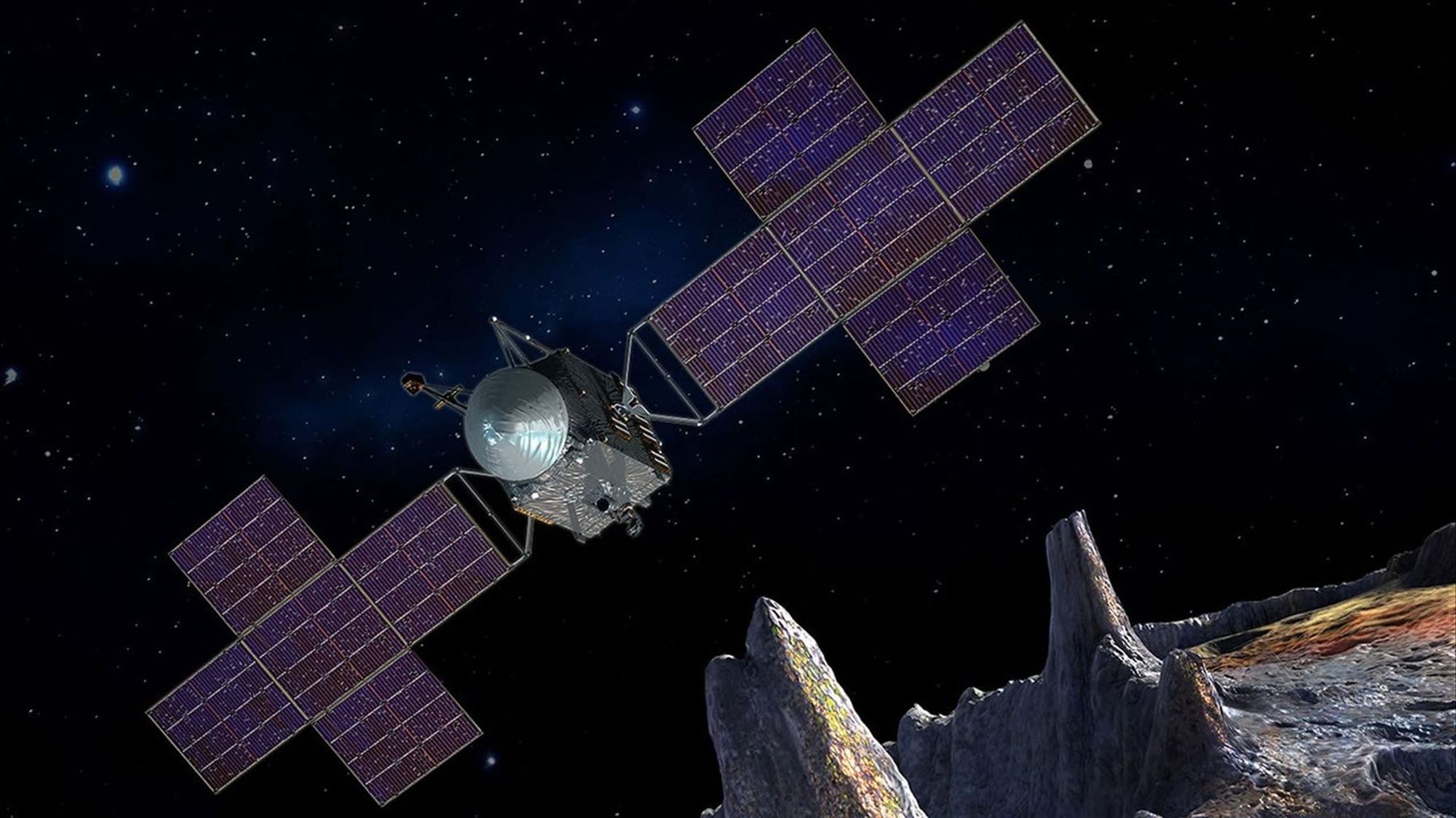
(SpaceEnergy) NASA's Psyche spacecraft has resumed sustained solar-electric propulsion following its Mars gravity assist, beginning a new cruise phase in which xenon Hall thrusters are expected to operate nearly 90% of the time.
NASA disclosed on 22 October that the spacecraft began near-continuous thrusting on 28 September, following its successful Mars flyby in May.
The spacecraft uses four Hall-effect thrusters, operating one at a time, to accelerate xenon ions and produce up to 250mN of thrust.
Its two cross-shaped solar arrays provide a combined collecting area of approximately 75m², generating electricity for the propulsion system, spacecraft equipment and battery charging.
Psyche launched in October 2023 carrying approximately 1,090kg of xenon across seven tanks. NASA said around one-third of that supply has been consumed.
Mission controllers expect the thrusters to operate at full power for approximately three months before gradually reducing power as the spacecraft travels farther from the Sun and receives less solar energy.
NASA also reported measurements of subtle torque generated by the thrusters' magnetic fields and swirling ions. Engineers use reaction wheels and short corrective thrusting manoeuvres to manage the resulting changes in spacecraft momentum.
The spacecraft pauses sustained propulsion approximately once a week for communications with Earth.
Psyche is scheduled to reach the metal-rich asteroid of the same name in summer 2029, where it will enter orbit for a planned two-year scientific investigation.
Discussion