
Reflect Orbital books two Skyroot launches for orbital mirror satellites
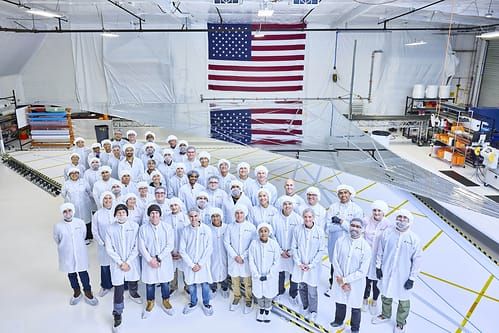
(SpaceEnergy) US space-energy developer Reflect Orbital has purchased two dedicated launches from Indian rocket manufacturer Skyroot Aerospace to deploy spacecraft designed to redirect sunlight towards selected locations on Earth.
The companies announced the agreement on 14 October, identifying Skyroot's Vikram-1 rocket for the first launch and its upgraded Vikram-1U vehicle for the second.
The Vikram-1U remains under development and incorporates additional first-stage boosters intended to improve launch performance.
Reflect Orbital is developing satellites equipped with large mirrors to direct sunlight towards terrestrial locations, including solar power installations.
The proposed system could extend electricity generation at photovoltaic facilities beyond normal daylight hours, although the company has not demonstrated commercial electricity delivery using its orbital infrastructure.
Other potential applications include providing illumination for search-and-rescue operations and construction activities.
Reflect Orbital said the Skyroot agreement would provide dedicated launch capacity and greater scheduling flexibility as it develops its satellite constellation.
The launches will supplement missions already planned from facilities in the United States.
Skyroot successfully completed the inaugural orbital flight of its Vikram-1 rocket in July 2026, establishing its capability to deliver commercial payloads into orbit.
The Indian company said the new agreement would expand its commercial launch manifest and support Reflect Orbital's phased spacecraft deployment programme.
Reflect Orbital chief executive Ben Nowack said securing launch capacity was important because of constraints in the commercial launch market.
The companies did not disclose the contract value, launch dates, number of spacecraft to be deployed or intended orbital parameters.
The agreement represents a launch-procurement milestone rather than an operational demonstration of space-based sunlight delivery.
Discussion