
Prometheus engine manufacturing could cut energy use by 80%, ESA says
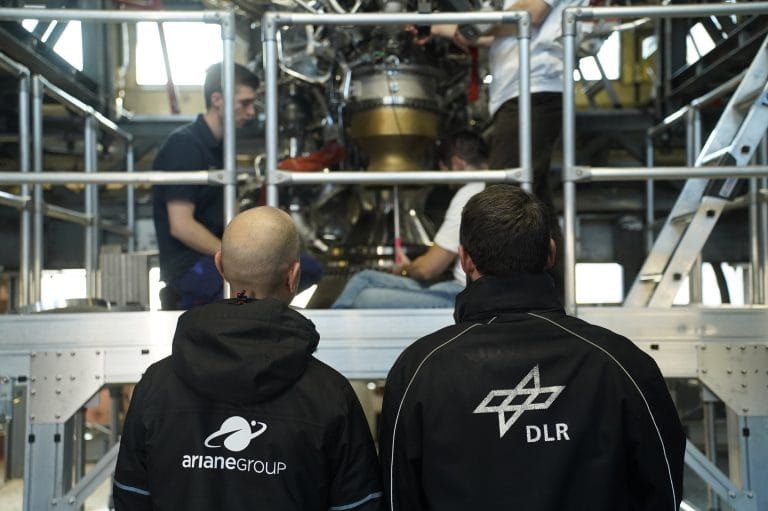
(SpaceEnergy) Advanced manufacturing techniques used for Europe's Prometheus rocket engine could cut production energy consumption by up to 80%, the European Space Agency (ESA) told SpaceEnergy.
The savings stem from extensive use of additive and other advanced manufacturing methods, which allow components to be produced closer to their final shape, reducing material waste and the energy required for machining.
ESA estimates that, depending on the manufacturing process, energy consumption per kilogram could fall by 60–80%, carbon dioxide emissions by 30–70% and unit production costs by 20–40%. Critical components could also be manufactured two to 10 times faster.
The comments follow successful Prometheus hot-fire tests on 29 October at the upgraded P5 test bench in Lampoldshausen, Germany, reported by SpaceEnergy on 7 November.
That campaign validated a combustion chamber produced using cold gas spray, an additive manufacturing technique, and demonstrated multiple engine reignitions. It also marked the first operation of the upgraded P5 facility using liquid oxygen and methane.
Prometheus, developed by ArianeGroup under ESA's Future Launchers Preparatory Programme, is designed for future reusable European launch vehicles.
ESA stressed that the estimated energy savings concern manufacturing processes, not the complete engine or its energy consumption during operation.
The agency also highlighted the trade-offs between methane and hydrogen propulsion.
Biomethane production is at least twice as cheap and less carbon-intensive per kilogram of fuel produced than hydrogen production, ESA said. However, hydrogen delivers higher propulsion efficiency, reducing the propellant and vehicle mass needed to reach orbit.
Methane-powered launcher configurations could approach twice the gross lift-off mass of comparable hydrogen configurations, depending on architecture.
These considerations informed ESA's PROTEIN study, which identified a configuration combining biomethane for the lower stage with hydrogen for the upper stage.
ESA said propellant selection ultimately depends on mission requirements, with hydrocarbons favoured for high-thrust first stages and hydrogen offering advantages for high-performance upper stages.
Discussion