
JAXA develops AI method to detect electrical threats to satellite solar cells
(SpaceEnergy) Japan's space agency JAXA and Kyushu Institute of Technology have developed an artificial intelligence method to detect satellite surface charging that can damage solar cells, JAXA reported on 29 October.
The researchers analysed approximately 19 years of spacecraft observations, identifying around 3,000 charging events and establishing conditions under which satellites are particularly vulnerable to electrical discharge.
The system uses a convolutional neural network to identify charging signatures in plasma measurements collected by satellites operated under the US Defense Meteorological Satellite Program.
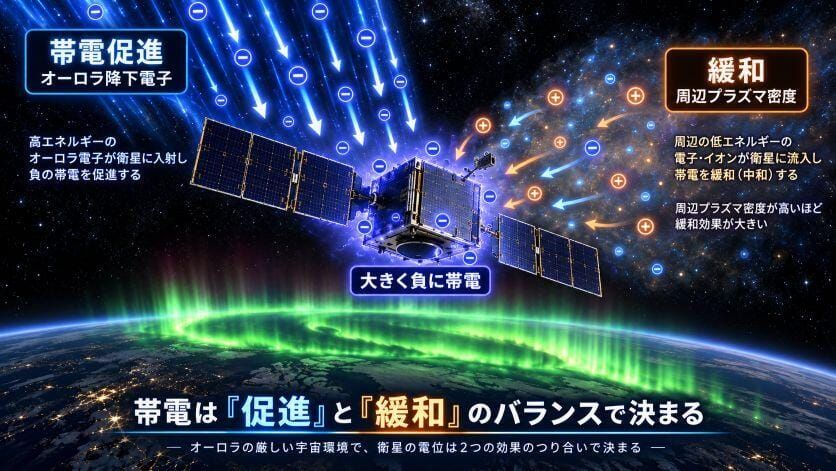
The research found that high-energy electrons associated with auroral activity promote negative charging, while positive ions in the surrounding ionospheric plasma can reduce the effect.
Satellites cannot discharge accumulated electricity through an Earth connection. Differences in electrical potential across their surfaces can consequently produce discharges capable of damaging solar cells, protective materials and onboard equipment.
Understanding these conditions could help spacecraft operators reduce electrical risks during orbital servicing, refuelling and docking operations.
JAXA said the findings would support further research into predicting charging conditions and identifying safer periods for spacecraft maintenance.
The detection method remains a research development rather than an operational satellite protection system.
The findings were published in the American Geophysical Union's journal Space Weather on 27 October 2026.
Discussion