
Software issue cuts BepiColombo’s Mercury orbit insertion burn short
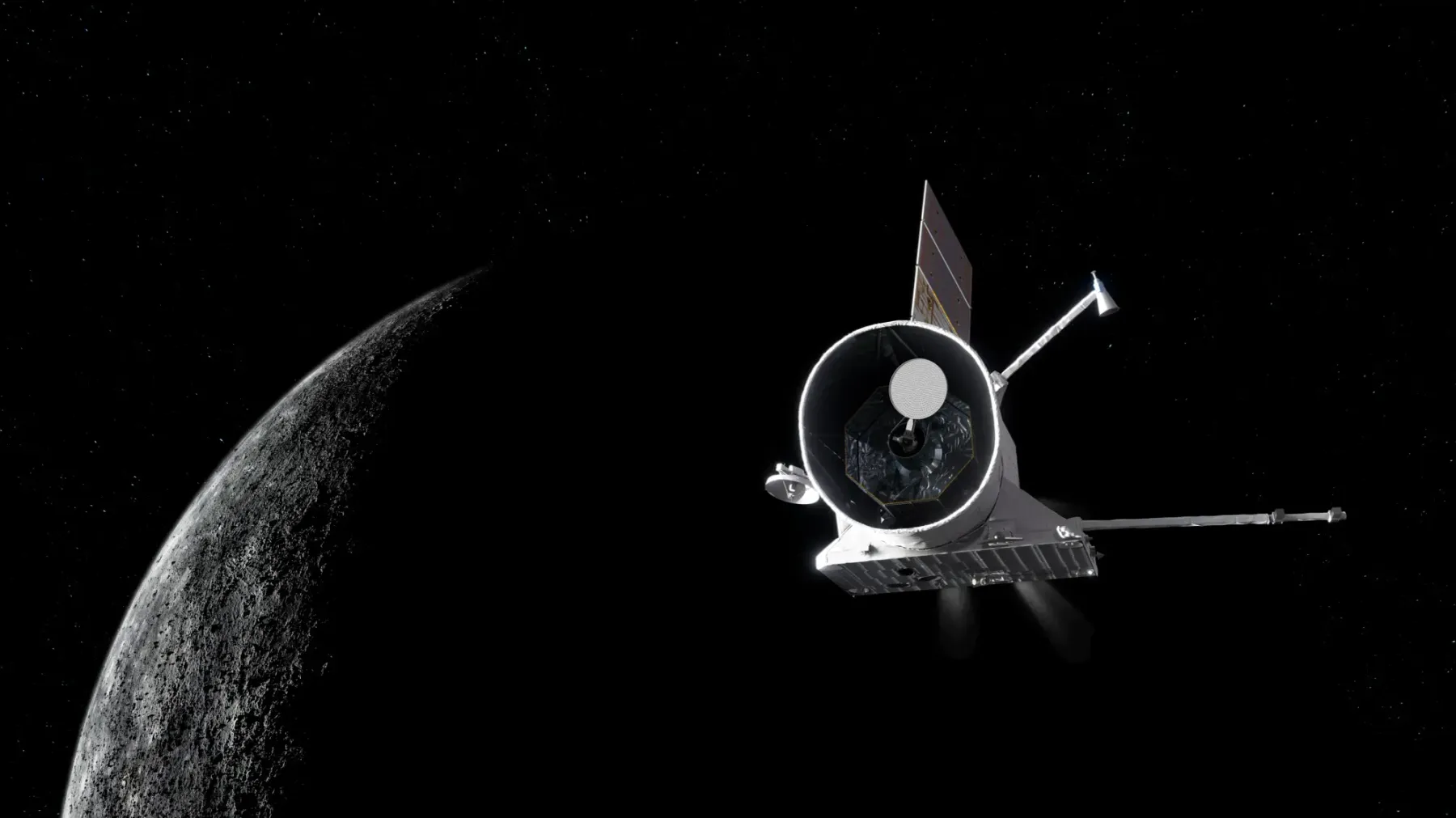
(SpaceEnergy) A software issue ended the European Space Agency’s BepiColombo Mercury orbit insertion burn early, achieving about 77% of the planned velocity change, though the spacecraft is safely in orbit.
The European Space Agency (ESA) said on 23 November 2026 that its BepiColombo spacecraft was in a stable orbit around Mercury after the Mercury Planetary Orbiter (MPO) began Mercury orbit insertion (MOI) at 18:24 UTC (Coordinated Universal Time) on 21 November 2026.
According to ESA, the MPO fired its four axial thrusters as planned, but the manoeuvre was autonomously interrupted and the spacecraft entered safe mode. ESA said its analysis showed the burn, expected to last 37 minutes, “had ended prematurely, achieving around 77% of the total planned velocity change.” The agency said ESA and Airbus had traced the problem to “a software issue involving attitude guidance and thruster control.”
The spacecraft is now in a 75-hour orbit rather than the originally planned 58-hour orbit. ESA said the remaining MOI sequence had been adapted so that no extra burns are needed.
ESA said BepiColombo arrived using a technique called weak stability capture, reaching Mercury at lower speeds than is typical, an approach made possible by solar electric propulsion and nine planetary flybys. The agency said it uses multiple shorter burns near Mercury’s closest approach to conserve propellant by reducing gravity losses.
“Upon finding Bepi in safe mode, it was like flipping a switch. Everybody was focused in understanding what had happened,” said Ignacio Tanco, ESA BepiColombo Flight Operations Director.
ESA said the MPO and the Japan Aerospace Exploration Agency’s (JAXA) Mercury Magnetospheric Orbiter, known as Mio, are scheduled to separate on 9 December 2026. The MPO is due to reach its final orbit by March 2027, with science operations to begin in April 2027.
Discussion