
NASA's ESCAPADE twins complete first powered Earth flybys en route to Mars
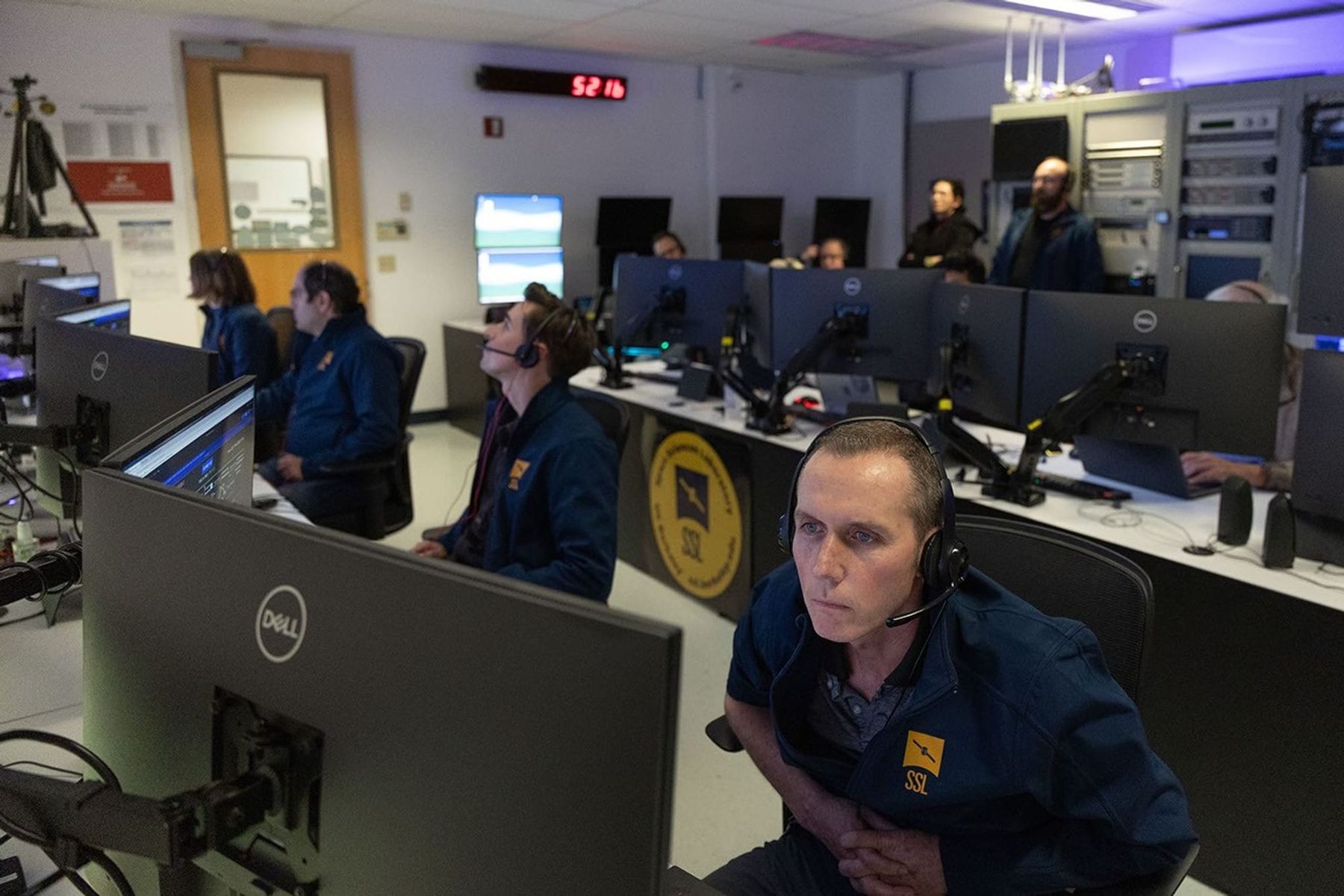
(SpaceEnergy) NASA's twin ESCAPADE spacecraft have each completed a powered Earth flyby, combining a gravity assist with an engine burn, the first time NASA has used the technique to send spacecraft to Mars.
NASA said on 9 November 2026 that both spacecraft of its Escape and Plasma Acceleration and Dynamics Explorers (ESCAPADE) mission had completed powered Earth flybys and are now on course to reach Mars in September 2027.
The first spacecraft made its closest approach on 7 November 2026, about 1,000 miles (about 1,600km) above Earth, and performed a trans-Mars injection burn of roughly nine minutes that committed it to its path. The second spacecraft followed on 9 November 2026 at an altitude of about 650 miles (about 1,050km).
Ahead of the manoeuvres, NASA said no spacecraft bound for Mars had previously completed a powered flyby, also known as an Oberth manoeuvre, in which an engine burn is performed at closest approach to a planet to gain the greatest boost. The agency said each burn would raise the spacecraft's speed from about 6.3 to about 6.7 miles per second (about 10.1 to 10.8km per second), an increase of more than 1,000 miles per hour.
The spacecraft launched from Cape Canaveral Space Force Station on 13 November 2025, when Earth and Mars were on opposite sides of the Sun. Rather than heading directly to Mars, they entered a loiter orbit around Lagrange point 2, about one million miles (about 1.6 million km) from Earth, before returning for the flybys.
After a cruise of about ten months, Mars orbit insertion burns, each lasting about 11 minutes, are planned for 7 and 9 September 2027. The spacecraft will then fly in formation to study how the solar wind drives atmospheric loss at Mars, with science operations expected to begin in June 2028.
The mission is led by the University of California, Berkeley's Space Sciences Laboratory, with partners including Rocket Lab, NASA's Goddard Space Flight Center, Embry-Riddle Aeronautical University, Advanced Space and Blue Origin. It is funded by NASA's Heliophysics Division under the Small Innovative Missions for Planetary Exploration (SIMPLEx) programme.
Discussion