
NASA awards $39.3m for SR-1 Freedom nuclear spacecraft heat rejection system
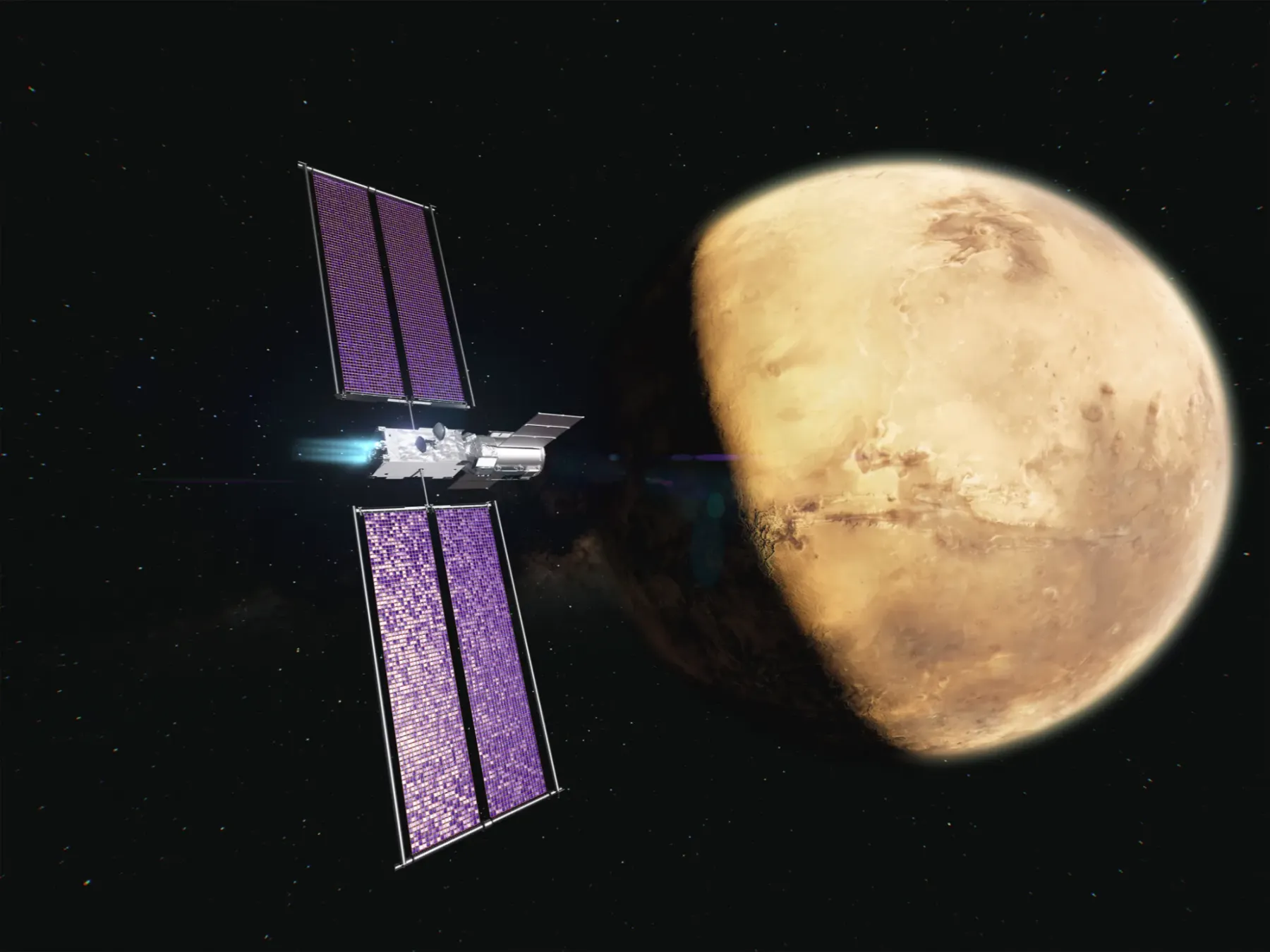
(SpaceEnergy) NASA has locked in the mission architecture for its SR-1 Freedom nuclear spacecraft and awarded a $39.3m contract to Johns Hopkins University’s Applied Physics Laboratory for the nuclear power module’s heat rejection system.
NASA said on 24 November 2026 that a major mission design review, held in October at its Glenn Research Center in Cleveland, Ohio, had locked in key elements of Space Reactor-1 (SR-1) Freedom. The agency describes the spacecraft as the first fission-powered spacecraft to travel beyond Earth orbit. It is planned for launch in late 2028 and will demonstrate nuclear electric propulsion.
The $39.3m contract, awarded under the Aerospace Research, Development, and Engineering Support II contract, covers development of the heat rejection system for the spacecraft’s nuclear power module. NASA said the Applied Physics Laboratory (APL) will design, build, test and evaluate the system and produce the flight hardware. Advanced Cooling Technologies is working with APL as a commercial partner, supplying heat pipe and composite radiator technologies.
Among the design changes, NASA said the spacecraft will use a shorter boom than shown in early illustrations, which it said will reduce weight, simplify assembly and help streamline the design.
Improvements in shielding and spacecraft design will allow the reactor to operate closer to the rest of the spacecraft while maintaining radiation protection for electronics and the SkyFall payload. SR-1 Freedom will also use larger X-band antenna dishes to send data back to Earth.
Teams are still evaluating the number of radiator panels, the output power levels of the nuclear power module and how long the reactor will operate.
Under the mission profile, the reactor will power up after the spacecraft leaves Earth orbit and run for an initial period before shutting down, with solar arrays taking over for the cruise to Mars. After delivering SkyFall, a capsule carrying three helicopters, to Martian orbit, the reactor will restart to gather further performance data.
“This mission will be the first freight run on the railroad of the solar system,” said Steve Sinacore, SR-1 Freedom program director. “What we learn from SR-1 Freedom will shape the future of exploration for decades to come,” he added.
NASA told SpaceEnergy last month it was advancing nuclear power and propulsion technologies, targeting a late 2028 launch for its first fission-powered interplanetary spacecraft and a launch-ready lunar reactor by 2030.
Discussion